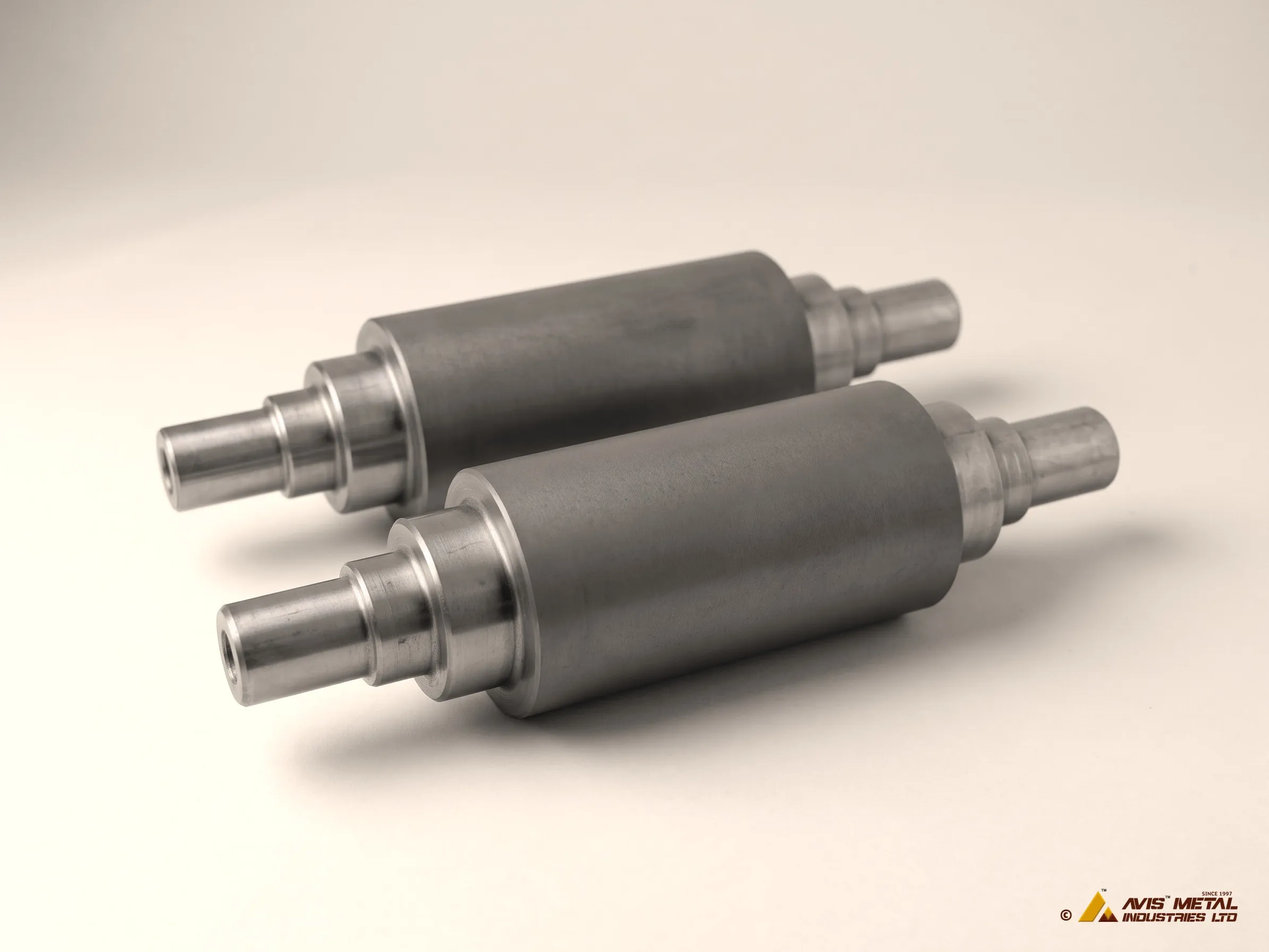
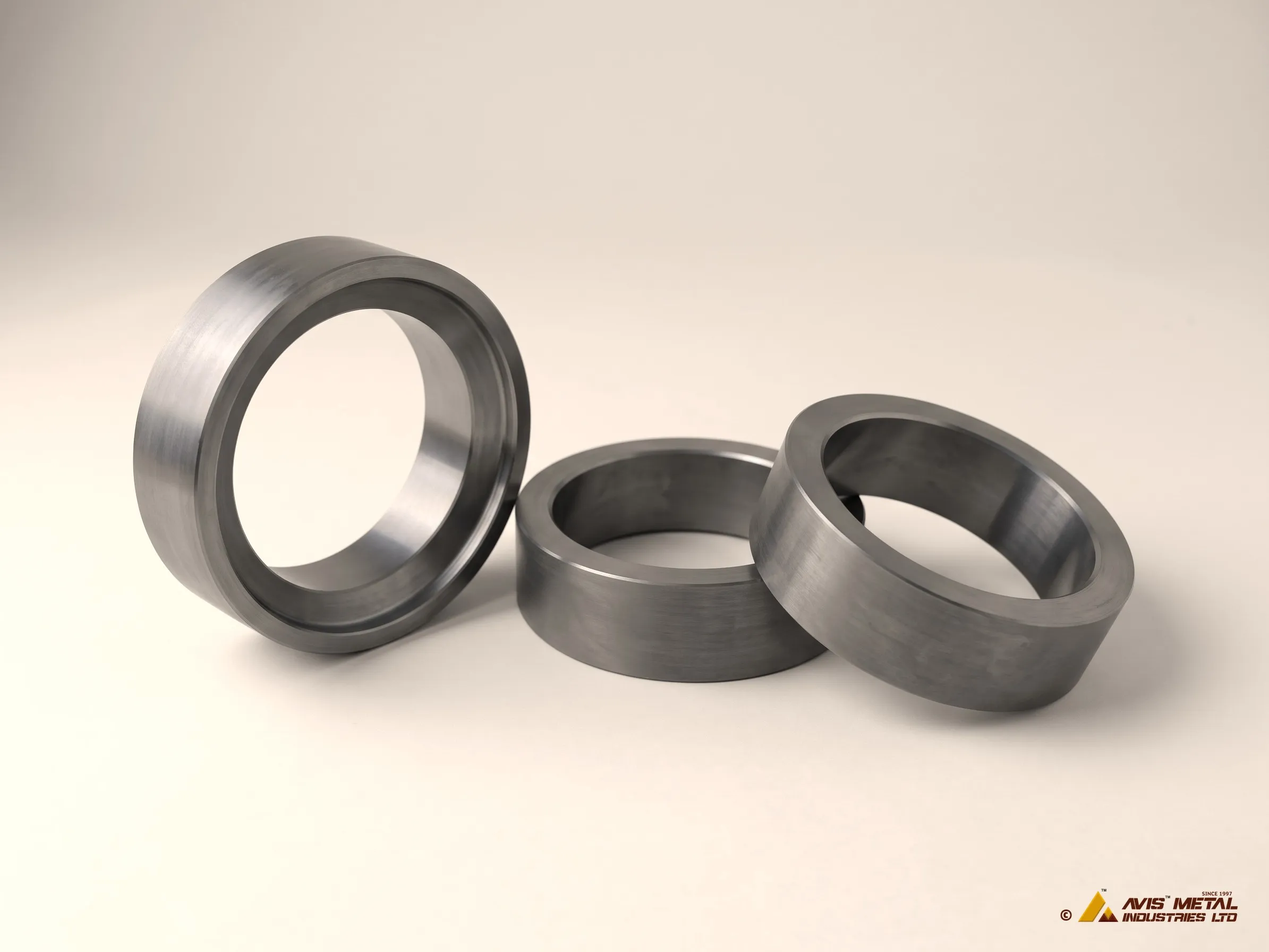
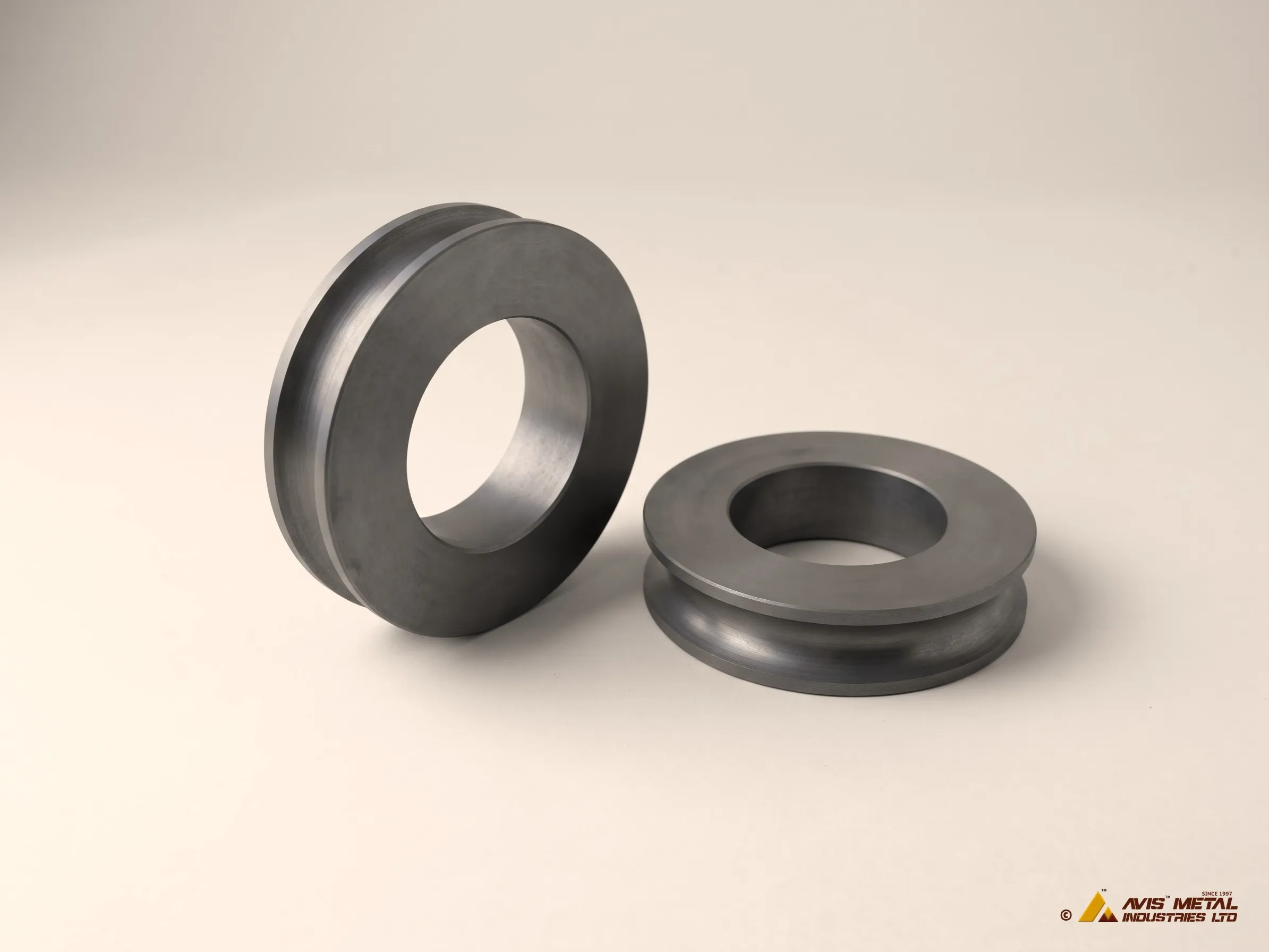
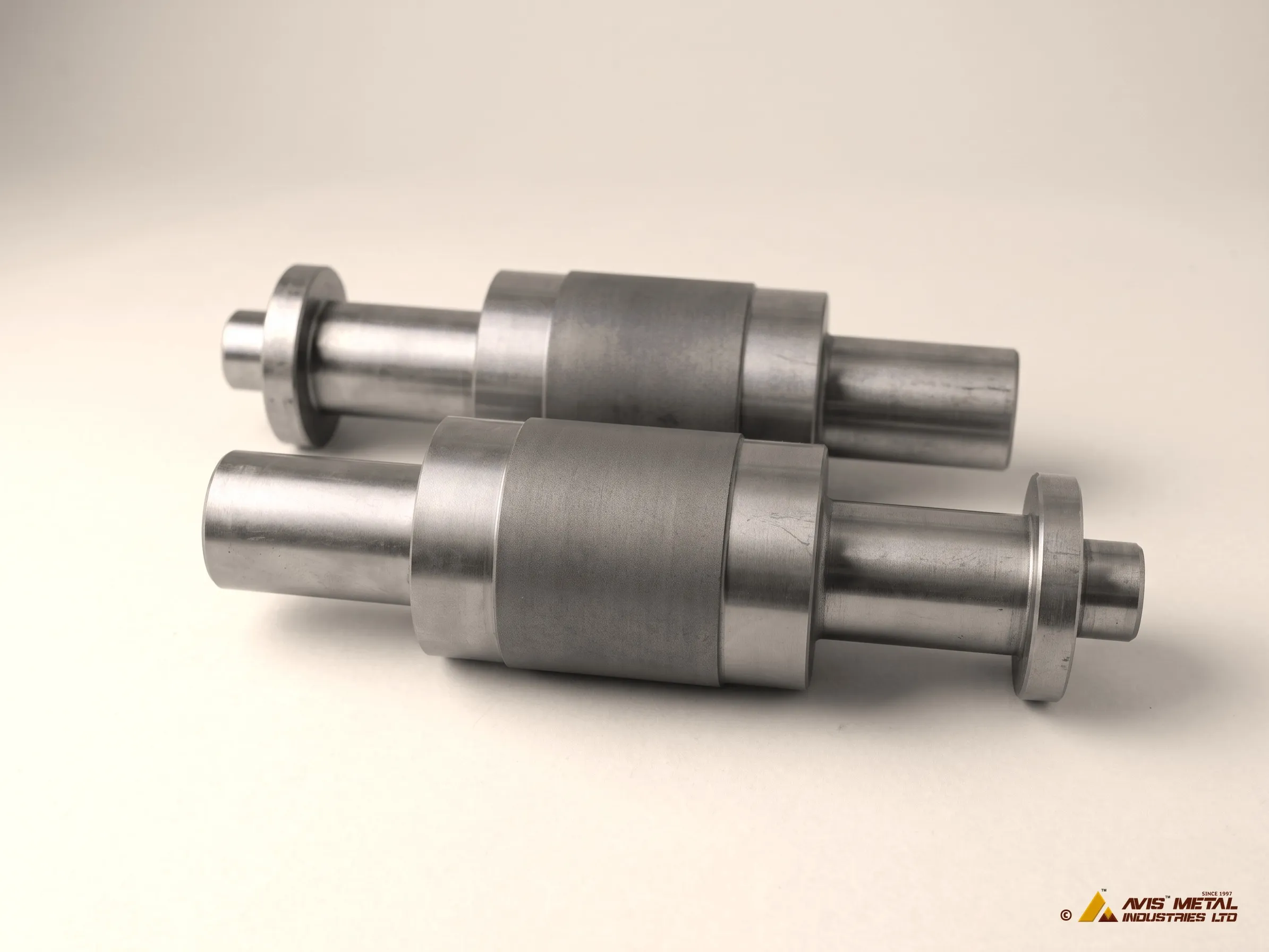
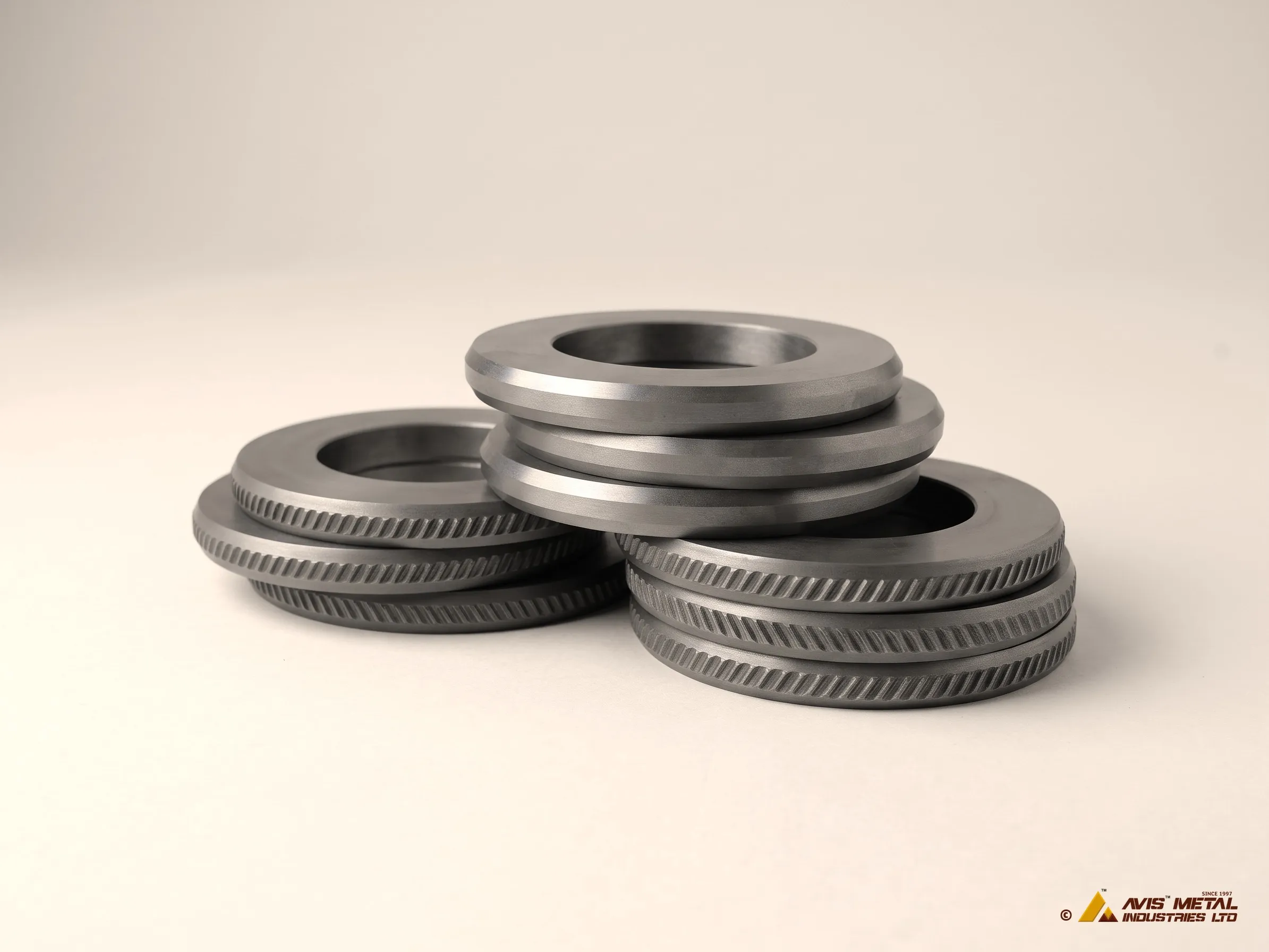
Wire flattening turns round wire into flat strip by rolling it between hard, precisely ground rolls. Flat wire for springs, cables, blades, staples and electrical uses depends on the roll keeping its surface and size. Once a roll wears or marks, every metre after it carries the defect. Tungsten carbide rolls are used here because they keep their finish over long rolling campaigns, much longer than steel rolls between regrinds.
We make tungsten carbide rolls for wire flattening, customised to each client’s needs. Our rollers range includes conventional WC-TiC grades and corrosion-resistant grades with a mixed Co-Ni-Cr binder, where the binder content varies with the application. We also offer composite roll rings that combine cemented carbide with steel. The surface finish of the roll is transferred straight to the flat wire, so we agree the finish and the profile with you before production. Flattening rolls often work in pairs or in a series of stands, so rolls of matching size and finish are usually ordered together. That keeps the strip thickness even across the line.
Rolls are made at Unit 1, Navsari, under our ISO 9001:2015 system, and checked for hardness and structure in our laboratory.